

















Wave Race – Following the Line Without Touching Anything
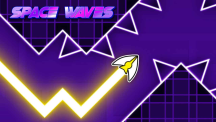
The movement in Wave Race takes only a few seconds to understand. Hold the button and the arrow climbs. Let go and it drops. The difficult part starts when walls begin closing in and the route ahead leaves almost no space for mistakes.
Wave Race is a 2D arcade game built around a zigzag movement system. The arrow never follows a straight line for long, so every section becomes an exercise in controlling height, angle, and timing. A gap that looks wide enough from a distance can feel much smaller once the arrow reaches it.
Learning the Shape of the Course
Most failures happen because of a tiny mistake rather than a major one. Holding the input slightly too long can push the arrow into a wall. Releasing too early can send it into a spike.
As new obstacles appear, the path becomes more about rhythm than speed. Rotating hazards, narrow corridors, and sudden changes in direction force constant adjustments. Some sections can be cleared smoothly once the movement pattern is understood, while others require several attempts before the timing feels right.
Controls
PC
Left Mouse Button / W / Spacebar – Hold to move upward
Release – Move downward
P – Pause
Mobile
Hold Screen – Move upward
Release Screen – Move downward
Small Inputs Matter
The arrow responds immediately, which means large corrections are rarely necessary. Many difficult sections can be cleared with brief taps and short holds rather than dramatic movements across the screen.
Watching farther ahead also helps. Looking only at the arrow leaves little time to react when a wall or obstacle appears around the next turn.
Course Difficulty
Earlier stages leave more room to experiment with the controls. Later sections remove much of that space and demand cleaner movement. The route may twist more often, obstacles can appear closer together, and recovery opportunities become much harder to find.
Because restarts are instant, most progress comes from repeated attempts and gradually understanding how each section flows.
Gameplay Experience
Wave Race feels simple until the course starts narrowing. Early runs are usually spent learning how long to hold and release, while later attempts become more about rhythm and control. The best moments come when a section that kept causing crashes suddenly feels easy because the timing finally clicks.